@alexaseleno

Choosing a Ph Analyser in 2026 is not simply a matter of buying the most expensive instrument. The right choice depends on sample type, testing frequency, accuracy requirements, and working conditions. A small laboratory may need a benchtop meter with stable readings, automatic temperature compensation, and clear calibration records. A field technician may value a portable model that survives dust, moisture, and repeated transport.
This guide examines the main Ph Analyser types, including benchtop, portable, handheld, and inline process systems. Each design solves a different problem. For example, an inline analyser can monitor a water treatment line continuously, while a portable meter can test a river sample beside the collection point. Calibration still matters. Fresh pH 4, 7, and 10 buffer solutions can influence confidence more than a bright display.
Small details matter.
Reliable selection also requires attention to electrode quality, response time, cleaning procedures, temperature range, data storage, and replacement costs. A technically advanced meter may perform poorly when its probe is neglected or stored incorrectly. That is an uncomfortable point, but it is often overlooked.
This overview uses practical testing principles and widely recognized measurement practices, including careful calibration and documented maintenance. However, no single model suits every workplace. Manufacturers may report impressive accuracy under controlled conditions, yet real samples can contain oils, suspended solids, salts, or biological material. The best Ph Analyser is therefore the one that matches your samples and workflow, not merely the one with the longest feature list.
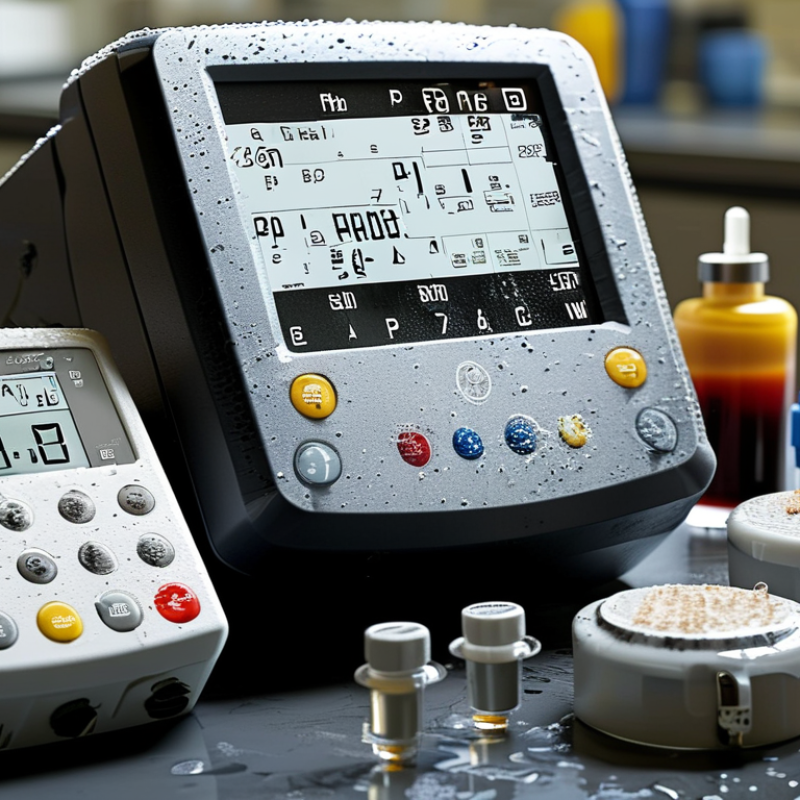
A pH analyser measures hydrogen-ion activity and converts it into a readable pH value. It usually combines a glass electrode, reference system, temperature sensor, and electronic transmitter. The type matters because samples are rarely identical. Clear water, thick sludge, hot process liquid, and low-conductivity samples can challenge different sensors.
A portable analyser suits inspections, field sampling, and short checks. A benchtop unit offers better control for laboratories, especially when repeatability matters. Online analysers support continuous process monitoring, but they need stable installation and regular cleaning. According to the U.S. Environmental Protection Agency, drinking-water pH is commonly assessed against a secondary range of 6.5 to 8.5. That range looks simple. The measurement is not.
ISO 10523:2012 recommends controlled calibration, temperature consideration, and suitable electrode maintenance. Industry market research also indicates steady growth in water-quality monitoring, driven by stricter process control and wider digital measurement use. However, market growth does not make every analyser suitable. A low-cost portable meter may fail in dirty samples. An advanced online system may be wasteful for occasional testing. I have seen users focus on display resolution while ignoring electrode response time and sample fouling. That is an easy mistake.
Choose by sample condition, testing frequency, required accuracy, and maintenance access. Ask how quickly the reading stabilizes. Check whether calibration records can be exported. Most importantly, confirm the electrode suits the chemistry. The “best” type is often the one that remains reliable after repeated, imperfect use.
What Is a pH Analyser and Why Does the Type Matter? Compare the main pH analyser formats by application, performance, installation, and operating requirements.
| pH Analyser Type | Typical Application | Typical pH Range | Typical Resolution and Accuracy | Temperature Compensation | Main Advantages | Key Limitations |
|---|---|---|---|---|---|---|
| Benchtop Laboratory Analyser | Laboratory testing, quality control, research, food and beverage analysis, water testing | Usually 0 to 14 pH, depending on the electrode | Resolution commonly 0.01 or 0.001 pH; accuracy commonly about ±0.01 to ±0.002 pH under controlled conditions | Usually automatic temperature compensation with a connected temperature probe | High repeatability, stable readings, larger display, advanced calibration records, and support for replaceable electrodes | Requires a bench, mains power or regular charging, and careful electrode maintenance; not designed for field mobility |
| Portable Handheld Analyser | Field sampling, wastewater checks, environmental monitoring, aquaculture, pools, and process inspections | Usually 0 to 14 pH; specialized electrodes may cover broader or narrower ranges | Resolution commonly 0.01 pH; accuracy commonly about ±0.01 to ±0.02 pH | Often automatic temperature compensation through an integrated or separate temperature sensor | Portable, battery powered, suitable for multiple sampling points, and generally more capable than pen-style meters | Readings can be affected by dirty samples, electrode storage, temperature changes, and field handling |
| Pen-Style Pocket Analyser | Fast screening of hydroponics, aquariums, pools, education, irrigation water, and routine spot checks | Commonly 0 to 14 pH | Usually 0.1 or 0.01 pH resolution; accuracy commonly about ±0.1 to ±0.05 pH | Some models provide automatic compensation; others require manual temperature consideration | Compact, low cost, simple to use, and convenient for quick measurements | Smaller electrodes and limited controls may reduce durability, stability, cleanability, and performance in difficult samples |
| Inline or Process pH Analyser | Continuous monitoring and control in water treatment, chemical processing, food production, bioprocessing, and industrial effluent systems | Often 0 to 14 pH, subject to process conditions and electrode materials | Display resolution commonly 0.01 pH; practical accuracy depends strongly on installation, calibration, fouling, and process conditions | Normally automatic compensation using a temperature element or a combined pH and temperature sensor | Continuous measurement, alarm and control outputs, remote monitoring options, and reduced need for manual sampling | Higher installation cost; requires correct flow conditions, grounding, cleaning, calibration, and scheduled sensor replacement |
| Specialty pH Analyser | Low-conductivity water, viscous samples, dirty media, high-temperature processes, soil, semi-solid materials, or micro-volume samples | Depends on the electrode design and sample chemistry; many remain within 0 to 14 pH | Varies widely; accuracy is determined by the sensor, reference system, sample matrix, and measurement procedure | May use automatic, manual, or externally measured temperature compensation | Designed to address difficult samples that can cause unstable or slow readings with standard electrodes | Usually costs more, may require specialized calibration solutions, and can have higher maintenance or replacement requirements |
Buying guidance: Choose a benchtop analyser for laboratory precision, a portable unit for dependable field work, a pen-style unit for quick screening, an inline analyser for continuous process control, and a specialty analyser when the sample has unusual conductivity, temperature, viscosity, or contamination.



Proud shareholder of Temot International

© 2025 Grandmark International. All rights reserved.