grandmark logoGrandmark International
@alexaseleno
Skip to main content

7 Auto Transmission Buying Tips for Global Buyers

Buying an auto transmission across borders is rarely a simple price comparison. A unit may look clean in photographs, yet its history remains unclear. Global buyers must connect vehicle data, transmission codes, operating conditions, and supplier records before committing funds. One overlooked connector can turn a promising purchase into an expensive workshop problem. This guide draws on practical sourcing questions used by importers, repair professionals, and fleet operators. It focuses on evidence rather than confident sales language.

The seven tips examine fitment verification, condition grading, testing documents, warranty terms, packaging, freight planning, and supplier communication. Ask for the exact code, donor vehicle details, mileage evidence, fluid photographs, and test results. Small details matter. A cracked plug, wet cardboard corner, or missing torque-converter note can reveal weak preparation. Reliable sellers should explain what was inspected, what was replaced, and what remains uncertain. However, no checklist removes every risk. Even experienced buyers sometimes trust familiar brands too quickly.

A professional decision also considers local service capability, installation requirements, return procedures, and realistic delivery timing. Compare complete landed costs, not only the unit price shown online. Keep written records of questions and answers. They protect memory. More importantly, they expose vague promises before payment. The recommendations here are practical, but conditions vary by vehicle, market, and supplier. Treat each tip as a checkpoint, not a guarantee. Careful verification may feel slower, yet it often costs less than correcting a mismatched transmission after arrival.

7 Auto Transmission Buying Tips for Global Buyers

Identify the Right Transmission Type for Your Vehicle and Market

Choosing the right automatic transmission starts with the vehicle, not the price tag. Check the engine’s torque, vehicle weight, drivetrain, and intended use. A small city car may suit a compact transmission with smooth low-speed shifts. A loaded utility vehicle needs stronger cooling and higher torque capacity. Match the transmission to local roads, traffic, and terrain. Frequent hills can expose weak cooling systems quickly. Confirm the correct gear ratios for your engine and tire size. Incorrect ratios may increase fuel use and heat. Read the service records, if available. Look for fluid leaks, delayed engagement, unusual vibration, or burnt-smelling fluid. A short road test helps. Small details matter.

Your market also changes the buying decision. In hot regions, inspect the cooler, seals, and temperature history. Cold climates demand reliable fluid performance during startup. Dusty or remote areas require accessible filters and proven sealing. Ask local technicians which transmission types they can diagnose and repair. Parts availability matters more than a low purchase price. Confirm fluid specifications and maintenance intervals before signing any agreement. Check fuel economy expectations under local driving conditions. Also verify import documents, safety requirements, and warranty terms for your destination. Do not trust a clean exterior alone. No checklist is perfect. A careful buyer should still obtain an independent inspection and accept that some hidden wear may remain.

Verify Compatibility Through Specifications, Codes, and Vehicle Data

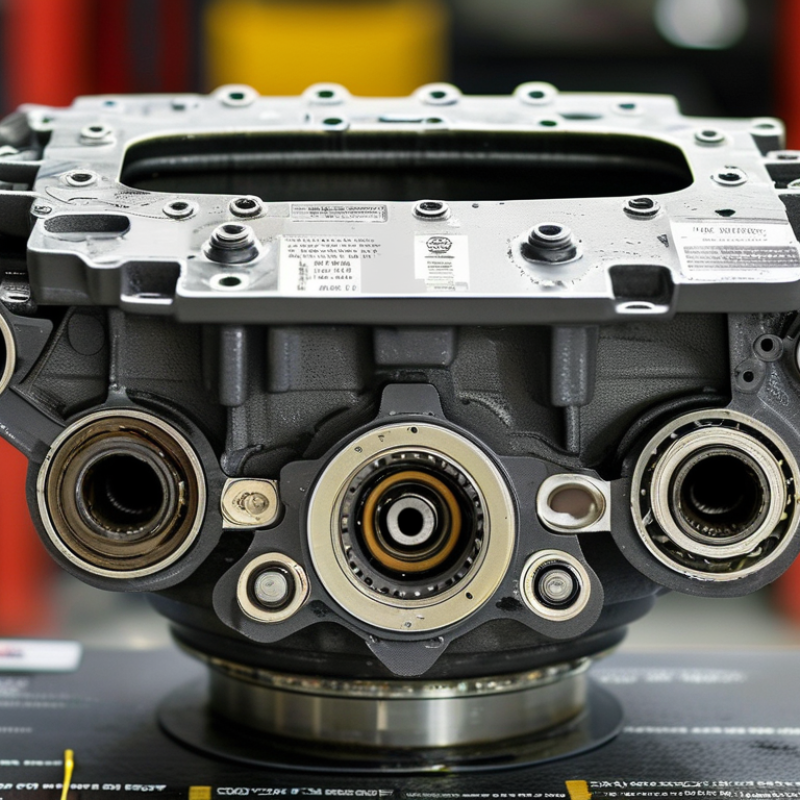
A used automatic transmission can look correct and still be incompatible. Verify the transmission code, engine type, drivetrain, production year, and vehicle identification data before discussing price. The same housing may contain different gear ratios, sensors, or control systems.

Use the vehicle identification number, original transmission label, service records, and factory specifications as matching points. Compare bellhousing shape, mounting holes, axle connection, electrical connectors, torque rating, and final-drive ratio. A clear photograph helps, but it cannot replace readable codes and measurements. Ask the supplier for test reports, mileage records, fluid-condition details, and the exact donor vehicle data. Keep those documents with the purchase file.

I have seen buyers trust a similar casting number and overlook a different calibration. That mistake can cause harsh shifts, warning lights, or expensive adaptation work. A quick visual match is tempting. It is not enough. Codes may also vary by market and production date, so confirm their meaning with a qualified technician or official technical database. I would recheck every number before payment, even when the seller sounds confident. My own inspection notes are not perfect, and missing one digit can change the entire result. Ask precise questions, request extra photos, and pause when specifications conflict.、】【

7 Auto Transmission Buying Tips for Global Buyers - Verify Compatibility Through Specifications, Codes, and Vehicle Data

Tip Verification Dimension Data to Confirm Before Purchase Reliable Reference or Evidence Common Mismatch Risk
1 Match the transmission identification code Record the complete stamped or cast transmission code, including suffixes, revision letters, and production markings. Do not rely only on the vehicle model or engine size. Clear photographs of the identification label, casing stamp, barcode, and build plate, cross-checked against a technical parts catalogue. Two units may have the same gear count but different internal ratios, valve bodies, sensors, or mounting points.
2 Verify vehicle identity and production date Confirm the 17-character VIN, model year, engine displacement, fuel type, drive layout, body style, and assembly or production month when available. VIN decoding record, registration document, original build sheet, or manufacturer service information. Mid-year design changes can affect wiring, sensors, software calibration, and transmission mounting even within one model year.
3 Check the number of forward speeds and ratios Compare the number of forward gears, reverse ratio, final-drive ratio, and gear-ratio sequence. A six-speed unit is not automatically interchangeable with every other six-speed unit. Official ratio chart, repair manual, transmission data sheet, or measured specification from the exact transmission code. Different ratios can cause incorrect shift points, abnormal engine speed, speedometer errors, or excessive drivetrain load.
4 Confirm physical dimensions and mounting points Measure overall length, casing width, mounting-hole pattern, bellhousing interface, output-shaft position, axle-centerline height, and transmission mount location. Dimensioned drawings, workshop measurements, installation photographs, and comparison with the original unit. A small difference in mount position or output-shaft length may require structural modification or prevent correct driveshaft alignment.
5 Match input, output, and torque-converter specifications Verify input-shaft spline count and diameter, torque-converter pilot diameter, converter bolt pattern, output-shaft spline, differential arrangement, and rated torque capacity. Engineering drawings, spline measurements, torque-converter specification sheet, and the vehicle drivetrain service manual. A physically similar unit may fail to engage the crankshaft, driveshaft, differential, or torque converter correctly.
6 Validate electronics and control-system compatibility Check connector shape and pin count, input and output speed sensors, range sensor, solenoid arrangement, controller type, communication network, and software or adaptation requirements. Wiring diagrams, connector pinouts, diagnostic scan data, control-unit part references, and relearn procedures. The transmission may bolt in but remain in failsafe mode, shift harshly, or fail to communicate with the vehicle control network.
7 Confirm fluid, service history, and inspection condition Verify the required automatic-transmission fluid specification, approximate fill volume, cooler-line layout, mileage, donor-vehicle history, leak status, and functional test results. Fluid specification from the service manual, maintenance records, pressure-test report, diagnostic scan, and documented road or bench test. Using an incorrect fluid or accepting an untested unit can lead to clutch slip, overheating, delayed engagement, or premature wear.
Buyer checklist: Request the original transmission code, 17-character VIN, ratio chart, dimensional drawing, connector photographs, fluid specification, mileage record, and test report before approving an international shipment.

Compare New, Remanufactured, and Used Transmission Options

7 Auto Transmission Buying Tips for Global Buyers

Compare New, Remanufactured, and Used Transmission Options

A new transmission usually offers the clearest service history and the strongest warranty. It also carries the highest purchase price. Confirm the exact transmission code, engine size, model year, and drivetrain before ordering. Fitment comes first. A small code difference can cause shifting problems or installation delays.

Remanufactured units can balance cost and reliability when rebuilt by a qualified facility. Ask which internal parts were replaced, how the unit was tested, and whether test records are available. Check the warranty length, labor coverage, and core-return requirements. I have seen buyers overlook return shipping, especially across borders. That mistake can erase the expected savings. Ask for proof.

Used transmissions often cost less and may suit older vehicles. However, mileage, storage conditions, fluid contamination, and accident history can remain uncertain. Request the donor vehicle’s mileage, inspection photos, fluid condition, and pressure-test results. A short warranty deserves careful attention.

Some sellers describe a unit as tested without explaining the test. That wording is not enough.

Compare the complete landed cost, including packaging, freight, taxes, duties, installation, and possible return fees. Currency changes can also affect the final budget. A remanufactured unit may look expensive initially, yet reduce downtime and repeated labor. Still, every claim should be checked against written documents.

Assess Supplier Quality, Warranty Terms, and Export Support

Global buyers should treat an automatic transmission as a controlled supply-chain purchase, not a catalog item. Supplier quality starts with an auditable production trail. Request process-flow records, heat-treatment results, serial traceability, and end-of-line test data. Ask for a sample teardown report. Require a documented failure-rate target and corrective-action process. ISO 9001 or IATF 16949 certification helps, but it never replaces independent inspection.

The World Bank’s 2023 Logistics Performance Index evaluates customs, infrastructure, logistics competence, tracking, and timeliness. Use these dimensions when comparing export partners. One imperfect lesson remains clear: attractive paperwork can hide weak batch control.

Warranty terms should define coverage, time, mileage, labor, freight, exclusions, and claim evidence. Confirm who pays return shipping when a tested unit fails. Set a response deadline for technical claims. A practical supplier should provide installation guidance, diagnostic procedures, and replacement-part availability. Test this support before placing a large order. Silence during a technical question is useful evidence.

Export support needs equal attention. UNCTAD’s Review of Maritime Transport 2023 reports that ships carry over 80% of global merchandise trade by volume. Confirm the correct Incoterm, customs classification, commercial invoice, packing list, origin documents, moisture protection, and shipment tracking. Request photos before container loading. A written recall or replacement process also matters. Buyers often focus on unit price and underestimate downtime, which is a costly mistake.

Calculate Total Costs, Shipping Risks, and After-Sales Requirements

When buying an automatic transmission overseas, calculate the landed cost, not only the unit price. Include inspection, inland transport, export documents, ocean freight, insurance, duties, taxes, storage, and local delivery. A low-cost unit can become expensive after port handling fees. Use three freight quotations, because rates and surcharges change quickly.
UNCTAD’s Review of Maritime Transport reports that more than 80% of global merchandise trade moves by sea. That makes route delays and port congestion serious cost risks. Ask for sealed packaging, moisture protection, pallet dimensions, gross weight, and cargo insurance coverage. The World Bank’s 2023 Logistics Performance Index shows major differences in customs efficiency, tracking, and delivery reliability across markets. Do not assume the fastest route is the safest route.
After-sales requirements need written details. Confirm the warranty period, testing evidence, serial-number records, return conditions, and response times. Request installation guidance and a fault-diagnosis process before payment. A replacement transmission may still require costly labor, fluid, programming, and towing. Those expenses are often excluded.
One detail gets missed.
A careful buyer should reserve a contingency budget, perhaps 10% to 15% of projected landed costs. This is not a universal rule, but it creates breathing room. My own calculation would remain provisional until the customs broker confirms classification and local charges. Even experienced buyers can underestimate storage fees after a delayed inspection. Reliable purchasing means documenting every assumption, not hiding uncertainty.