
grandmark logoGrandmark International
@alexaseleno
Skip to main content

What Are the Best Industrial Fans From China?

Choosing the best Industrial Fans from China requires more than comparing prices or motor ratings. A serious evaluation examines airflow, static pressure, efficiency, noise, materials, controls, and after-sales support. Factory conditions matter too. A dusty workshop, a humid processing line, and a high-temperature furnace need different fan designs.

Ventilation researcher Dr. Steven J. Hoff offers a practical principle: “The best fan is not the largest fan; it is the fan matched to the system.” This idea should guide every Chinese supplier comparison. A centrifugal fan may suit a high-pressure dust-collection system, while an axial fan may move large air volumes through a warehouse. The wrong choice can create vibration, wasted energy, and uncomfortable drafts.

Reliable manufacturers usually provide performance curves, motor details, balancing records, and test documentation. Look for clear data at the actual operating point, not only impressive maximum airflow. Ask about impeller materials, bearing life, protective coatings, and replacement parts. Request a sample inspection when possible. Small details matter.

Yet no shortlist is perfect. Published efficiency figures may not reflect real installation conditions. Factory communication can also be uneven. That deserves attention. Buyers should verify claims through drawings, test reports, references, and independent technical review. This guide explores leading Industrial Fans from China through that practical lens. It considers performance, durability, customization, certification, delivery reliability, and total ownership cost. The cheapest quotation may become expensive after installation. A balanced decision remains more valuable than a dramatic specification.
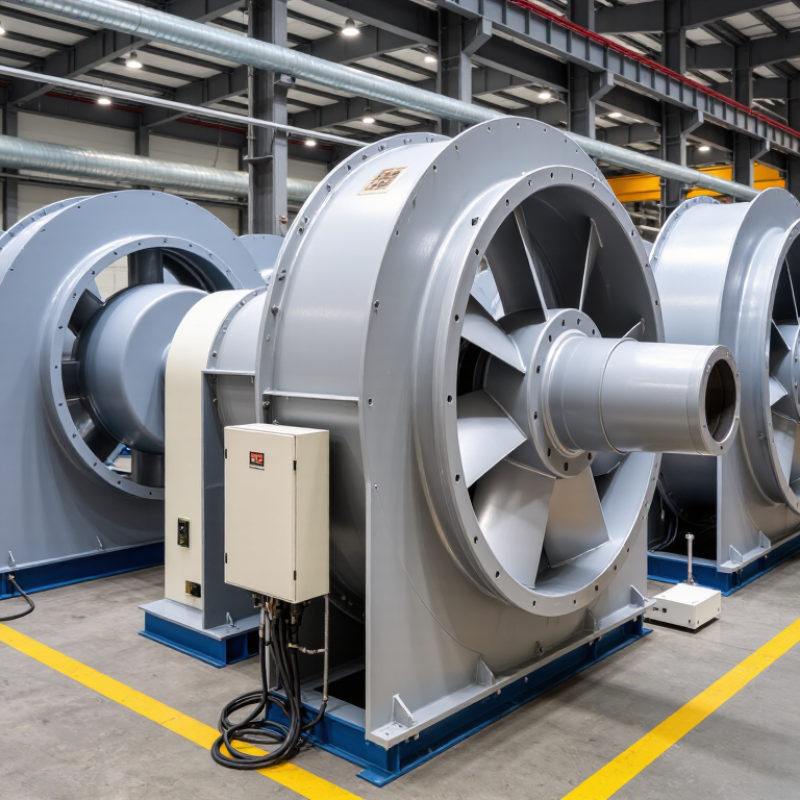
What Are the Best Industrial Fans From China?

Industrial Fan Types Commonly Manufactured in China

Chinese manufacturers commonly produce several industrial fan types for different airflow tasks.

Centrifugal fans use scroll housings and curved blades. They suit dust collection, boiler ventilation, and process exhaust. Static pressure matters here. A large airflow number alone can mislead.

Axial fans move air along the shaft. They often serve workshops, warehouses, tunnels, and cooling lines. Their compact frames simplify installation, but pressure performance may fall in long duct runs.

Mixed-flow fans combine axial and centrifugal features. They can handle moderate pressure with relatively low noise.

Roof exhaust fans remove hot air near ceiling level. HVLS fans move broad air volumes slowly across open floors. This reduces stagnant heat around workers and machinery.

Portable and wall-mounted fans support spot cooling. Selection should consider temperature, humidity, corrosive gases, dust loading, duty cycle, motor protection, and local electrical requirements.

Ask for performance curves, not only catalog claims.

In practical sourcing, I check impeller balance, weld quality, bearing access, vibration readings, and guard spacing.

Factory testing should record airflow, pressure, power use, and noise under stated conditions. Specifications sometimes look precise while test setups differ. That deserves scrutiny.

A cheaper fan can become expensive after belts, filters, or difficult maintenance are added. Request material certificates and a clear spare-parts list.

Even experienced buyers can choose the wrong fan when the duct resistance is the real problem. Rechecking the system layout is worthwhile.

Key Performance Factors for Selecting a Chinese Industrial Fan

Selecting a Chinese industrial fan starts with the duty point, not the catalog photograph. Define airflow, static pressure, temperature, dust load, and operating hours. A fan rated for high volume may fail when duct resistance rises. Check the performance curve at your actual pressure. Do not rely on free-air figures. They can mislead. Ask for test conditions, measurement tolerances, and speed settings. Experienced suppliers should explain where the curve becomes unstable.

Motor efficiency matters, but system efficiency matters more. Compare power input at the required airflow and pressure. Inspect impeller balance, bearing quality, casing thickness, and welding consistency. For corrosive or humid areas, confirm material grades and protective treatment. Noise should be measured at a stated distance, not described as “quiet.” Vibration readings during a factory test reveal problems that photographs cannot. I have seen attractive units shake after installation because the foundation and coupling were ignored.

Request a sample or witnessed factory test when the application is critical. Verify serial data, certificates, spare-part availability, and control compatibility. Ask how faults are diagnosed remotely. Response time matters when ventilation supports production. The lowest quotation may hide thinner steel, weaker motors, or incomplete testing. Still, higher price does not automatically mean better engineering. Recheck the assumptions. Dust buildup and seasonal changes can shift the duty point.

Leading Chinese Industrial Fan Manufacturers and Product Ranges

China’s industrial fan manufacturers cover a wide range of equipment and production capabilities. Many factories produce axial fans for warehouses, workshops, and tunnels. Others specialize in centrifugal fans for dust collection, ventilation, and process exhaust. Large-volume low-speed fans serve factories, logistics centers, and sports halls. Compact wall-mounted and roof fans suit smaller buildings.

Leading manufacturers often provide customized impellers, motors, control panels, and mounting systems. Product materials may include coated steel, stainless steel, or aluminum. Selection should consider airflow, static pressure, temperature, humidity, dust concentration, and operating hours. Diameter alone is not enough. That shortcut fails.

Experienced buyers usually request performance curves, vibration data, motor efficiency details, and factory test records. Independent inspection can add confidence before shipment. Check electrical protection ratings and conformity documents for the destination market. Spare parts availability also matters, especially for motors, bearings, and belts. A reliable manufacturer should explain noise levels and maintenance intervals clearly. Some suppliers respond quickly but provide incomplete technical data. That is a warning sign. During evaluation, compare actual duty points instead of impressive catalogue figures. A short site visit can reveal loose wiring, poor balancing, or weak protective coating. These details often decide whether a fan performs reliably after installation.

Quality Standards, Certifications, and Factory Inspection

Choosing an industrial fan from China requires more than comparing airflow and price. Quality begins with measurable requirements. Ask for performance data at defined airflow, static pressure, speed, noise, and power conditions. These figures should match recognized testing methods and the intended installation. Material thickness, welding quality, impeller balance, and motor protection also affect service life. Small details matter.

ISO 9001 certification can indicate controlled production and documented procedures. It does not prove that every fan performs equally well. Depending on the destination market, request applicable certifications such as CE, UKCA, UL, or relevant IEC test evidence. Check certificate numbers, product scope, issuing bodies, and validity dates. A certificate alone is not enough. Ask whether the tested model matches the proposed motor, impeller, and electrical configuration.

During a factory inspection, I check incoming material records, production drawings, and component traceability. I also watch impeller balancing, welding points, coating thickness, and final electrical testing. The factory should record airflow, vibration, noise, and temperature results for each batch. Request a live demonstration with calibrated instruments, not only printed reports. I have learned that paperwork can look complete while process control remains uneven. Some suppliers may pass one sample but lack consistent batch quality. Independent pre-shipment inspection can expose this weakness before loading.

What Are the Best Industrial Fans From China? - Quality Standards, Certifications, and Factory Inspection
Evaluation Dimension Relevant Standard or Certification What a Qualified Manufacturer Should Provide Factory Inspection Focus Practical Acceptance Evidence
Airflow and Pressure Performance ISO 5801 or AMCA 210 test methods; GB/T 1236 is widely used in China for fan aerodynamic performance testing. Test data showing airflow, static pressure, total pressure, efficiency, rotational speed, and electrical input under defined operating conditions. Check the test rig, calibration status, measurement instruments, test procedure, and whether the reported operating point matches the requested duty point. Signed performance test report with test conditions, instrument identification, uncertainty information, and a clearly defined fan curve.
Energy Efficiency GB 19761, China’s mandatory energy-efficiency standard for fans, where the product category and application are covered. Declared efficiency values and product parameters that correspond to the applicable fan type, operating range, and rated motor configuration. Verify motor and impeller specifications, efficiency calculations, test data, and consistency between the tested configuration and mass production units. Applicable energy-efficiency test documentation, rating information, and traceable records for the supplied model configuration.
Electrical Safety IEC 60204-1 for electrical equipment of machinery; IEC 60335-2-80 may apply to certain household and similar-use fans. The applicable requirement depends on product design and end use. Electrical diagrams, insulation and grounding provisions, overload protection, terminal specifications, and documented safety tests. Inspect wiring, protective earth continuity, insulation resistance, dielectric strength testing, enclosure protection, and component traceability. Routine test records, electrical safety test reports, wiring diagrams, and inspection records linked to production batches.
Motor Quality IEC 60034 series for rotating electrical machines; IEC 60034-30-1 addresses efficiency classes for line-operated AC motors. Motor rated voltage, frequency, power, speed, insulation class, IP rating, efficiency class, service factor, and duty rating. Verify incoming motor inspection, nameplate data, winding tests, bearing quality, balancing, temperature-rise testing, and supplier documentation. Motor datasheet, test certificate, nameplate photographs, batch records, and evidence that the installed motor matches the approved specification.
Mechanical Strength and Balance Applicable machinery-safety requirements and documented manufacturer design criteria; ISO 21940 can be used for rotor balancing principles. Balanced impeller, adequate shaft strength, secure hub and blade fastening, suitable bearings, and guards for rotating parts. Check dynamic balancing equipment, balance grades, weld quality, shaft runout, fastener locking, guard rigidity, and vibration-control procedures. Balancing report, dimensional inspection record, vibration measurement, and final assembly inspection checklist.
Noise and Vibration ISO 13349 provides vocabulary and classifications for fans; ISO 13350 and ISO 13351 may be relevant to jet fans and fan mechanical design. Noise test methods must be specified separately. Sound-pressure or sound-power data measured using a stated method, measurement environment, distance, speed, and operating point. Review the acoustic test environment, microphone calibration, vibration sensors, mounting conditions, and whether the measured speed matches the quotation. Noise and vibration report containing test location, instrumentation, operating conditions, measured values, and acceptance limits.
Ingress Protection and Corrosion Resistance IEC 60529 for IP ratings; coating and material requirements should be defined according to the installation environment. Declared IP rating, enclosure construction, coating system, material grade, fastener material, and corrosion-protection method. Inspect coating thickness, surface preparation, adhesion, weld finishing, sealing, drainage, and material certificates for critical components. IP test evidence where required, coating inspection records, material certificates, and documented visual acceptance criteria.
Quality Management ISO 9001 certification is evidence of a quality-management system, but it does not by itself certify a specific fan’s performance. Controlled drawings, approved supplier lists, incoming inspection, process controls, nonconformance procedures, calibration management, and corrective-action records. Confirm certificate validity and scope, audit production records, sample inspection documents, calibration labels, and traceability from raw materials to finished goods. Valid certificate issued by an accredited certification body, quality manual or process map, inspection plans, and representative production records.
Market Access Compliance CE marking may involve applicable EU directives and harmonised standards; UKCA may apply in Great Britain. Other markets can require UL, CSA, or local approvals. Technical file, risk assessment, declaration of conformity where applicable, user instructions, product marking, and country-specific compliance documents. Check that the tested model, motor, controller, enclosure, and safety components match the shipped configuration and declared market requirements. Declaration of conformity, applicable test reports, product labels, manuals, and component certificates with consistent model numbers.
Production Capacity and Consistency ISO 9001 process controls and customer-approved inspection plans; no single certification guarantees production consistency. Defined monthly capacity, documented lead times, batch identification, spare-parts planning, and a repeatable final inspection process. Compare sample approval with production units, review capacity claims, inspect work-in-progress controls, and conduct random quantity and specification checks. Pre-production sample approval, first-article inspection, batch inspection report, packing list, serial-number record, and shipment release approval.
Final Pre-Shipment Inspection Customer-specific inspection specification supported by applicable ISO, IEC, GB, or market-access requirements. Inspection plan covering appearance, dimensions, rotation direction, airflow or pressure where practical, electrical safety, accessories, documents, and packaging. Use statistically defined sampling where appropriate; verify carton markings, shock protection, moisture protection, spare parts, manuals, and nameplate information. Independent or factory inspection report with photographs, measured results, nonconformity status, corrective actions, and release authorization.

How to Compare Prices, Customization, and After-Sales Support

What Are the Best Industrial Fans From China?

Price comparisons should begin with performance, not the quotation alone. A low offer may exclude controls, protective guards, export packing, or installation support. Request airflow, static pressure, motor efficiency, noise level, and duty cycle in writing. Then compare equal specifications across suppliers. A fan moving 30,000 cubic meters per hour is not a bargain if it creates excessive pressure loss. Check the total delivered cost, including spare parts and testing.

Customization can improve efficiency, but it requires technical discipline. Suppliers may adjust blade angles, casing materials, inlet sizes, or motor ratings. Ask for a drawing with dimensions, materials, connection points, and operating conditions. For corrosive areas, confirm coating thickness and material compatibility. For dusty workshops, discuss cleaning access and bearing protection. A sample test or factory performance report adds confidence. Still, paperwork can be incomplete. Review it carefully.

After-sales support often separates a practical supplier from a risky purchase. Confirm response times, warranty coverage, remote troubleshooting, and spare-parts availability. Ask whether replacement bearings, motors, and controllers can ship within a defined period. Request installation guidance with wiring diagrams and maintenance intervals. During supplier discussions, observe how clearly engineers answer technical questions. Vague replies deserve attention. I have seen buyers choose the lowest price, then wait weeks for a simple component. That decision looked efficient at first. It was not. A written service agreement can reduce this uncertainty, especially for customized units operating continuously.