grandmark logoGrandmark International
@alexaseleno
Skip to main content

How to Diagnose Car Transmission Problems Like a Pro?

Diagnosing car transmission issues can be challenging. Many drivers feel overwhelmed when faced with strange noises or shifting problems. Understanding your car transmission is crucial for effective troubleshooting.

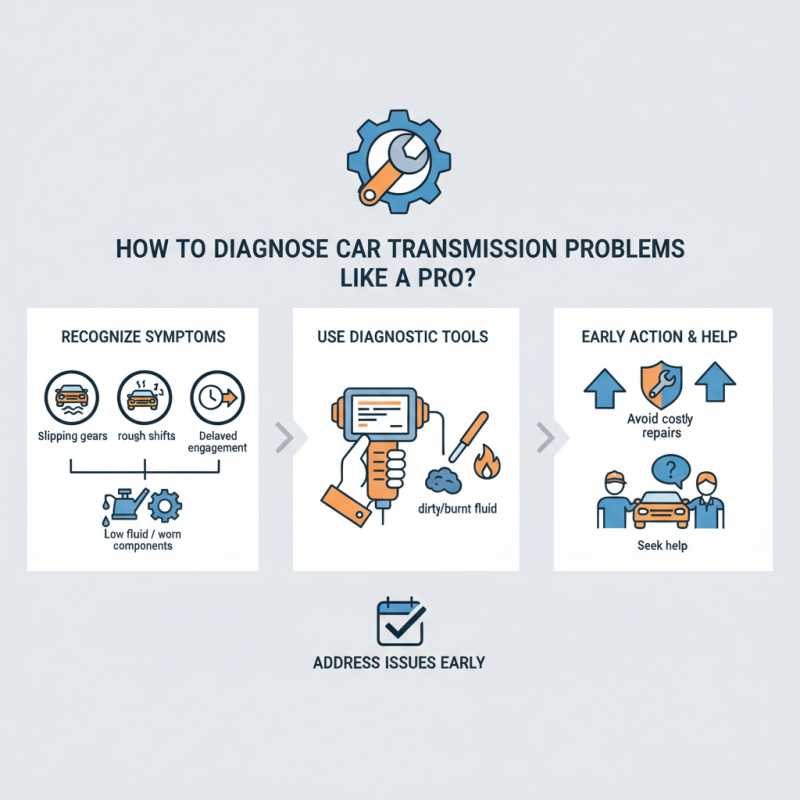
Begin by recognizing common signs of transmission trouble. Slipping gears, rough shifts, or delayed engagement often indicate deeper problems. These issues may arise from low fluid levels or worn components. It's essential to pinpoint these symptoms early to avoid costly repairs.

Next, consider using a diagnostic tool. A scanner can reveal error codes related to the transmission. These codes guide you in finding specific failures. Moreover, take a close look at the fluid condition. Dirty or burnt fluid points to maintenance needs. Remember, diagnosing transmission problems isn't always straightforward. Don't hesitate to seek help if you're unsure. It’s better to address issues early than to ignore them and face larger consequences later.
How to Diagnose Car Transmission Problems Like a Pro?

Understanding the Basics of Automotive Transmission Systems

Understanding the basics of automotive transmission systems is crucial for diagnosing issues. A car's transmission transfers power from the engine to the wheels. It manages speed and torque. If it fails, you might experience slipping, rough shifting, or strange noises. These symptoms often hint at deeper problems.

Most drivers rely heavily on their transmissions but can overlook maintenance. Routine checks can prevent significant failures. Fluid levels are vital; low fluid may cause overheating. Chattering or grinding noises often signal worn gears. Sometimes, the dashboard might display warning lights, a sign that immediate attention is needed. Observing these cues can save time and money.

However, recognizing problems isn't always straightforward. A small leak may lead to larger issues if ignored. Sometimes, odd behavior can be mistaken for normal operation. It’s essential to reflect on driving habits. If unfamiliar sounds or sensations arise, investigate. Trusting your instincts about car performance is key to successful diagnosis.

How to Diagnose Car Transmission Problems Like a Pro?

Diagnostic Method Description Symptoms Recommended Action
Fluid Check Inspect the transmission fluid level and condition. Low or dirty transmission fluid. Top off or replace transmission fluid.
Scan for Codes Use an OBD-II scanner to check for transmission-related error codes. Check engine light on, error codes related to transmission. Investigate and address error codes.
Road Test Take the vehicle for a drive to assess transmission performance. Slipping, hard shifting, or unusual noises. Consider professional diagnosis.
Visual Inspection Check for leaks, worn components, or loose connections. Puddles under the car, damaged wiring or mounts. Repair visible issues.
Pressure Test Measure transmission fluid pressure to diagnose potential issues. Inadequate pressure resulting in poor performance. Consult a technician for further analysis.

Identifying Common Symptoms of Transmission Issues

How to Diagnose Car Transmission Problems Like a Pro?

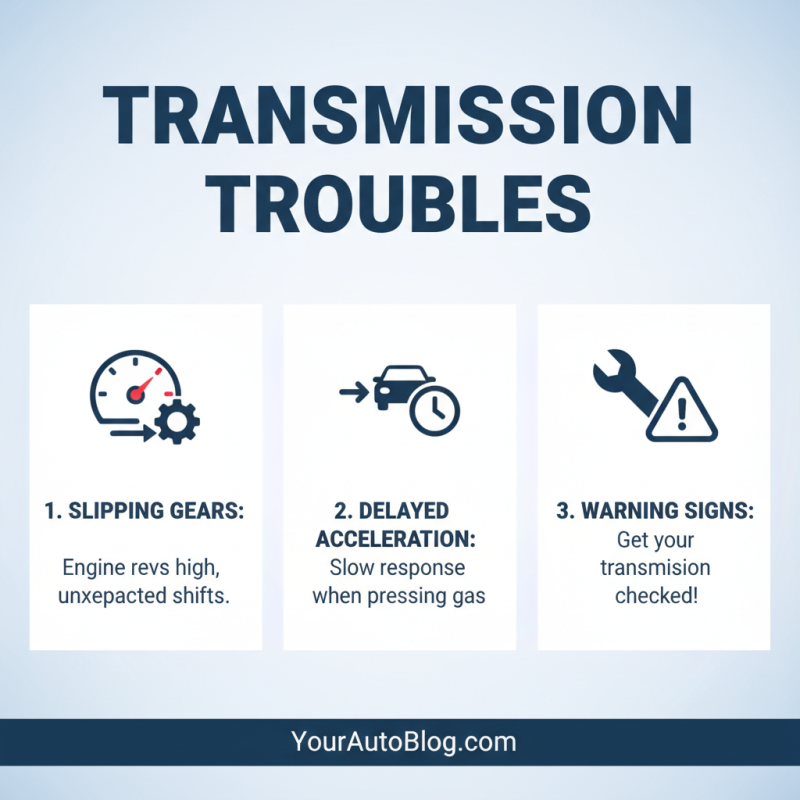
Transmission problems can manifest in various ways. One common symptom is slipping gears. You'll notice the engine revs higher than normal. This often happens when the vehicle shifts unexpectedly. You might also experience delayed response when accelerating. These signs indicate that your transmission needs attention.

Another symptom is unusual noises. Grinding or clunking sounds while shifting may suggest serious issues. Pay attention if the noises increase with speed. Additionally, fluid leaks can be a major red flag. Transmission fluid is usually bright red or brown. If you see spots under your vehicle, investigate. Low fluid levels can cause overheating and damage.

Lastly, check for dashboard warning lights. A transmission light could indicate a problem needing diagnosis. Ignoring it might lead to costly repairs later. Look for these signs early. Regular maintenance can prevent issues from getting worse. Knowing what to look for can help you act quickly. Ultimately, understanding these symptoms makes you more prepared for any potential problem.

Tools and Equipment Needed for Diagnosing Transmissions

Diagnosing car transmission problems requires specific tools. It’s essential to have the right equipment ready. A reliable code reader can help identify electronic issues. This device connects to the car’s diagnostic port. It reads error codes related to the transmission. A pressure gauge is also vital. It checks the hydraulic pressure within the transmission system.

Using a multimeter is another key component. This tool measures electrical signals. It can help find wiring problems affecting the transmission. Don't overlook basic tools like wrenches and screwdrivers. These come in handy for physical inspections. A lift or jack stands are crucial for accessing the vehicle's undercarriage.

Tips: Always wear safety gear while working. It protects you while you inspect the vehicle. Take notes of any findings during your process. Consistent documentation helps track recurring issues. It also guides your repairs effectively. Be patient; diagnosing can take time, and sometimes it might require a second look.

Diagnostic Tools & Equipment for Car Transmission Problems

Step-by-Step Diagnostic Procedures for Transmission Problems

When diagnosing transmission problems, precision is key. Start with visual inspection. Check for leaks under the vehicle. Fluid stains can indicate trouble. Look for damage around the transmission pan and lines. If the transmission fluid appears dark or has a burnt smell, that’s a red flag. Make a note of any unusual sounds during operation.

Next, focus on performance issues. Pay attention to how the car shifts. Is it slipping or hesitating? Jot down any strange behaviors. Using a diagnostic tool can help. Check for any trouble codes related to the transmission. These codes will guide you in identifying specific issues. However, remember that codes are only part of the story. Don’t rely solely on them; physical symptoms matter too.

While conducting your inspections, remain aware of your own biases. It’s easy to assume the worst. Sometimes, issues may stem from simpler sources like a sensor or electrical connection. Take a moment to reflect on your findings before jumping to conclusions. Every detail counts in this complex area of automotive repair.

When to Seek Professional Help for Transmission Repairs

How to Diagnose Car Transmission Problems Like a Pro?

When it comes to your vehicle, the transmission is crucial. It ensures smooth gear shifts and overall functionality. If you notice odd noises or slipping gears, it might be time to get help. Don’t ignore warning signs. Delaying could lead to severe damage and cost you more later.

Understand when to seek professional help. If the dashboard lights flash, that's a red flag. Strange odors can also indicate trouble. A grinding noise when shifting? That’s a clear signal. In these cases, a professional's expertise is essential. They have the tools and experience to diagnose complex issues.

Sometimes, DIY fixes don't cut it. You may feel tempted to fix things yourself, but this can worsen the problem. Misdiagnosing a symptom leads to wasted time and money. Professionals can identify the root cause quickly. Don’t let hesitation stop you from reaching out when needed.